Category Archives: Literature

Open Access Resources for Operational Research

Open Access Resources for Operational Research

2025 marked the 50th Anniversary of the founding of the European Association of Operational Research Societies (EURO) and to mark the occasion the Editors of the European Journal of Operational Research (EJOR) commissioned a set of Invited Reviews covering the scope of Operational Research published by the journal [note that there are still a few articles to be published].

  • Borgonovo, E., Jose, V. R. R., Knowlton, M., Shachter, R., Siebert, J. U., & Ulu, C. (2026). Fifty years of decision analysis in operational research: A review. European Journal of Operational Research, 329(2), 355-377. https://doi.org/10.1016/j.ejor.2025.05.023 
  • Kaya, A., Conejo, A. J., & Rebennack, S. (2026). Fifty years of power systems optimization. European Journal of Operational Research, 329(1), 1-23. https://doi.org/10.1016/j.ejor.2025.05.022 
  • White, L. (2026). Fifty years of Soft Operational Research: The contribution of EURO and EJOR to its foundation and development. European Journal of Operational Research, 328(3), 735-748. https://doi.org/10.1016/j.ejor.2025.05.040 
  • Artigues, C., Hartmann, S., & Vanhoucke, M. (2026). Fifty years of research on resource-constrained project scheduling explored from different perspectives. European Journal of Operational Research, 328(2), 367-389. https://doi.org/10.1016/j.ejor.2025.03.024 
  • Agnetis, A., Billaut, J. C., Pinedo, M., & Shabtay, D. (2025). Fifty years of research in scheduling — Theory and applications. European Journal of Operational Research, 327(2), 367-393. https://doi.org/10.1016/j.ejor.2025.01.034 
  • Fabozzi, F. J., Recchioni, M. C., & Renò, R. (2025). Fifty years at the interface between financial modeling and operations research. European Journal of Operational Research, 327(1), 1-21. https://doi.org/10.1016/j.ejor.2025.01.001 
  • Mergoni, A., Emrouznejad, A., & de Witte, K. (2025). Fifty years of Data Envelopment Analysis. European Journal of Operational Research, 326(3), 389-412. https://doi.org/10.1016/j.ejor.2024.12.049 
  • Beliën, J., Brailsford, S., Demeulemeester, E., Demirtas, D., Hans, E. W., & Harper, P. (2025). Fifty years of operational research applied to healthcare. European Journal of Operational Research, 326(2), 189-206. https://doi.org/10.1016/j.ejor.2024.12.040 
  • Clautiaux, F., & Ljubić, I. (2025). Last fifty years of integer linear programming: A focus on recent practical advances. European Journal of Operational Research, 324(3), 707-731. https://doi.org/10.1016/j.ejor.2024.11.018 
  • Aven, T., Rios Insua, D., Soyer, R., Zhu, X., & Zio, E. (2025). Fifty years of reliability in operations research. European Journal of Operational Research, 324(2), 361-381. https://doi.org/10.1016/j.ejor.2024.09.010 
  • Salvatore Greco, S., Słowiński, R., & Wallenius, J. (2025). Fifty years of multiple criteria decision analysis: From classical methods to robust ordinal regression. European Journal of Operational Research, 323(2), 351-377. https://doi.org/10.1016/j.ejor.2024.07.038 
  • Arts, J., Boute, R. N., Loeys, S., & van Staden, H. E. (2025). Fifty years of maintenance optimization: Reflections and perspectives. European Journal of Operational Research, 322(3), 725-739. https://doi.org/10.1016/j.ejor.2024.07.002 
  • Martí, R., Sevaux, M., & Sörensen, K. (2025). Fifty years of metaheuristics. European Journal of Operational Research, 321(2), 345-362. https://doi.org/10.1016/j.ejor.2024.04.004 
  • Hong, L. J., & Nelson, B. L. (2025). Fifty years of stochastic simulation: Where we are and where we need to go. European Journal of Operational Research. https://doi.org/10.1016/j.ejor.2025.06.033 
  • Babaï, M. Z., Syntetos, A. A., & Teunter, R. H. (2025). Fifty years of inventory research from a forecasting perspective. European Journal of Operational Research. https://doi.org/10.1016/j.ejor.2025.07.003 
  • Archetti, C., Coelho, L. C., Speranza, M. G., & Vansteenwegen, P. (2025). Beyond fifty years of vehicle routing: Insights into the history and the future. European Journal of Operational Research. https://doi.org/10.1016/j.ejor.2025.06.014 
  • Ehrgott, M., Köksalan, M., Kadziński, M., & Deb, K. (2025). Fifty years of multi-objective optimization and decision-making: From mathematical programming to evolutionary computation. European Journal of Operational Research. https://doi.org/10.1016/j.ejor.2025.06.012 
  • Marianov, V., & Eiselt, H. A. (2024). Fifty Years of Location Theory – A Selective Review. European Journal of Operational Research, 318(3), 701-718. https://doi.org/10.1016/j.ejor.2024.01.036 
  • Hausken, K. (2024). Fifty Years of Operations Research in Defense. European Journal of Operational Research, 318(2), 355-368. https://doi.org/10.1016/j.ejor.2023.12.023 
  • Salo, A., Doumpos, M., Liesiö, J., & Zopounidis, C. (2024). Fifty years of portfolio optimization. European Journal of Operational Research, 318(1), 1-18. https://doi.org/10.1016/j.ejor.2023.12.031 

In the UK, the Journal of the Operational Research Society celebrated its 75th anniversary in 2024. Formerly known as Operational Research Quarterly, it is the oldest Operational Research (OR) journal worldwide. It marked the occasion with the publication of an encyclopaedic article on Operational Research as the entire contents of Issue 3 of Volume 75.

  • Petropoulos, F., Laporte, G., Aktas, E., Alumur, S. A., Archetti, C., Ayhan, H., Battarra, M., Bennell, J. A., Bourjolly, J.-M., Boylan, J., Breton, M., Canca, D., Charlin, L., Chen, B., Cicek, C. T., Cox, L. A., Jr., Currie, C. S. M., Demeulemeester, E., Ding, L., Disney, S. M., Ehrgott, M., Eppler, M. J., Erdoğan, G., Fortz, B., Franco, L. A., Frische, J., Greco, S., Gregory, A. J., Hämäläinen, R. P., Herroelen, W., Hewitt, M., Holmström, J., Hooker, J. N., Işık, T., Johnes, J., Kara, B. Y., Karsu, Ö., Kent, K., Köhler, C., Kunc, M., Kuo, Y.-H., Letchford, A. N., Leung, J., Li, D., Li, H., Lienert, J., Ljubić, I., Lodi, A., Lozano, S., Lurkin, V., Martello, S., McHale, I. G., Midgley, G., Morecroft, J., Mutha, A., Oğuz, C., Petrovic, S., Pferschy, U., Psaraftis, H. N., Rose, S., Saarinen, L., Salhi, S., Song, J.-S., Sotiros, D., Stecke, K. E., Strauss, A. K., Tarhan, İ., Thielen, C., Toth, P., Vanden Berghe, G., Vasilakis, C., Vaze, V., Vigo, D., Virtanen, K., Wang, X., Weron, R., White, L., Van Woensel, T., Yearworth, M., Alper Yıldırım, E., Zaccour, G., & Zhao, X. (2024). Operational Research: Methods and Applications. Journal of the Operational Research Society, 75(3), 423-617. https://doi.org/10.1080/01605682.2023.2253852
The Issue of Trust

The Issue of Trust

The use of models is fundamental to decision-making in Operational Research (OR), in application areas that range widely across all aspects of an organisation’s activities. For an OR practitioner, as an expert modeller working with a client, the epistemic basis for trusting the findings generated from models tends to come down to a question of model validation and verification. What this means in practice is that the client needs to be satisfied, to trust, that the conceptual representation of the problem is valid and that the computer model is a verified representation of the conceptual model. 

Models based on techniques such as Discrete-Event Simulation (DES) are frequently used to make predictions about the future behaviour based on new assumptions and configurations. For example, answering questions such as ‘what would happen to performance if we were to modify the resources available and/or process flows?’ The development of simulation models, their parameterisation using data obtained during the study, and validation are difficult and time-consuming activities. 

Despite the obvious benefits of modelling and simulation studies, evidence suggests that there is patchy uptake. The considerable technical complexity of conducting a simulation study adds conceptual distance between the expert modeller and the commissioners or owners of a study and make the problem of establishing trust harder. Of course, all practitioners want to see their studies translate into practical application; for example, delivering operational improvements in the client organisation or seeing policy recommendations implemented. Approaches do exist for reducing this conceptual distance with the aim of improving uptake. Drawing on Problem Structuring Methods (PSMs), hybrid techniques combine elements of a PSM with the simulation study in a multi-methodology to help bridge the conceptual divide. A good example of this approach is PartiSim, developed by Tako and Kotiadis (2015) for facilitated simulation modelling in healthcare.

In ‘Facets of Trust’, Harper, Mustafee and Yearworth (2021) looked at the practice issues facing the expert modeller when conducting a modelling and simulation study, particularly the intangible factors that mediate trust; such as interpersonal relationships, the credibility of the simulation practitioner, and facilitation skills, rather than the technical details of specific methodologies. Their literature review into this question surfaced the dynamic tensions[1] that operate in the space of the tripartite set of relationships that exist between the expert modeller, the simulation model, and the stakeholders.

This implies that the greater the risk to stakeholders arising from decisions informed by the modelling and simulation study the greater the level of trust is required in order to get the findings of the study adopted. Although this relationship is not (yet) an empirically tested proposition, it does resonate well with some of the meaning that has been associated with the term stakeholder as it has evolved over time (Reed, 2022). Literally, what is, or could be, at stake in the decision-making informed by the modelling and simulation study?

In Facets of Trust, the authors identify a number of concerns that exist in each of the three parts of the trust relationship that lead to the overall model. For the expert modeller/stakeholder relationship, practitioners are interested in questions of problem formulation, conceptual modelling, and methods selection. This is where PSMs come into their own as they focus on the process of problem formulation in the presence of diverse and conflicting worldviews on the problem at hand. Between the expert modeller and the model, practitioners not only have to address the more familiar questions about validation and verification, but also take care about documentation, reproducibility and the replicability of the study. And then between the stakeholder and the model, there are questions of model credibility and aspects of facilitation and social learning. On the issue of model credibility and the learning potential from ‘wrong models’ see recent work by Tsioptsias, Tako and Robinson (2022).

It is the expert modeller/stakeholder and stakeholder/model relationships that deserve more of our attention since the trust issues involved here are less commensurate with the particularly technical nature of Discrete-Event Simulation and the software packages that are used (e.g. Simul8, AnyLogic…). The notion of a calculus of trust and risk invites questions of measurement. If there is a trade-off between trust and risk, how much effort should be placed in building trust in order to affect the likelihood for the take-up of recommendations from the modelling and simulation study? How can trust be evaluated in order to calibrate this effort? Is there a level of trust that would transcend the purely technical considerations? This latter question has been explored by Tully, White and Yearworth (2019) in the context of attaching value to PSMs during the pre-contractual phase of a client/expert engagement i.e., this work posits the idea that trust can be established contractually such that questions of method and what the models are actually showing become secondary considerations in the relationship and therefore less important to making decisions about implementation[2].

Trust between an expert and a client or stakeholder group is clearly a broader question of interest to management and organisation scholars than just the specific concerns of OR practitioners attempting to get  the findings from their modelling and simulation studies implemented; and the research methods of such scholarship are applicable to the questions posed here. Ormerod, Yearworth and White (2022) make the case that practice theories are an important place to look to gain further insight into how OR practitioners approach their work and could lead to a better understanding of the issues around trust that arise in the relationship between an expert modeller and their clients or stakeholders. At a practical level the Facets of Trust article suggests pertinent questions for a critical reflective practitioner to consider in order to improve the likelihood of adoption of recommendations from their studies.

References

Harper, A., Mustafee, N., & Yearworth, M. (2021). Facets of trust in simulation studies. European Journal of Operational Research, 289(1), 197-213. https://doi.org/10.1016/j.ejor.2020.06.043

Ormerod, R., Yearworth, M., & White, L. (2022). Understanding participant actions in OR interventions using practice theories: a research agenda. European Journal of Operational Research, 306(2), 810-827. https://doi.org/10.1016/j.ejor.2022.08.030  

Reed, M. (2022). Should we banish the word “stakeholder”?  https://www.fasttrackimpact.com/post/why-we-shouldn-t-banish-the-word-stakeholder

Tako, A., & Kotiadis, K. (2015). PartiSim : A multi-methodology framework to support facilitated simulation modelling in healthcare. European Journal of Operational Research, 244(2), 555-564. https://doi.org/10.1016/j.ejor.2015.01.046

Tsioptsias, N., Tako, A., & Robinson, S. (2022). Are “wrong” models useful? A qualitative study of discrete event simulation modeller stories. Journal of Simulation, 17(5), 594-606. https://doi.org/10.1080/17477778.2022.2108736

Tully, P., White, L., & Yearworth, M. (2019). The Value Paradox of Problem Structuring Methods. Systems Research and Behavioral Science, 36(4), 424-444. https://doi.org/10.1002/sres.2557


[1]A trust/risk calculus?

[2] What this work is really saying, between the lines, is that management consultancies can trade on the trust of their brand, not necessarily their methods. We’re not questioning their methods, just that they don’t figure in deciding what counts as success. If a leading consultancy said ‘do this’ on the basis of a simulation study, would the client have the nerve not to? Deciding to hire the consultancy is a bigger decision than implementing their recommendations; perhaps the only really difficult decision that needs to be made. In this context the trust relationship is doing some very heavy lifting.

There are no solutions to complex problems

There are no solutions to complex problems

This may sound like a rather bleak pronouncement and completely contrary to the way in which complex problems are presented and discussed by, amongst others, politicians, the media, and commentators – expert and otherwise. However, I believe we have a language problem that gets in the way of having informed discussions about complex problems and how we work to do something about them. I want to explain that whenever we hear a statement that articulates a claim to have a solution or fix to a complex problem the speaker is making a category mistake, in effect their claim is logically meaningless. To then discuss and debate such statements, especially by introducing quantitative measures of success such as targets, we compound the category mistake and waste effort – both time and resources – chasing after illusions. 

To support my argument, let’s start with considering the idea of problems that do have a solution. The simplest category is puzzles, and good examples range from crosswords and sudoku through to spatial puzzles like jigsaws and Rubik cubes. There is one solution that everyone can agree is correct, and while it is possible to not always find the solution (i.e., not complete the puzzle), or to only solve part of the puzzle, it is not possible to have an ambiguous solution. The answer is either right, wrong, or perhaps only partially right. Many maths problems fall into this ‘puzzle’ category too. Skills can be developed at solving such problems. We can set tests and examine the performance of the problem solver by not just checking for the right answer but also for them to ‘show working’. 

If we next look at the solution to a puzzle we can see that once we have produced it the problem ceases to exist. By ceases to exist I mean that the problem has a known solution and does not need to be found again. Of course, the solution can be kept secret or not communicated – that is, after all, the enduring property of puzzles as tests or enjoyment. The dictionary definition of solution just reaffirms this straightforward notion as a resolution or answer. In process terms, a process for solving or fixing a problem is a process that is designed to make the problem go away. The problem is solved or fixed and there is nothing else that needs to be done.

From this starting point of problems as puzzles with singular solutions it is not too difficult to extend the argument to problems that have multiple solutions but still nonetheless have the property that whichever solution is chosen to fix the problem, the problem remains fixed (or solved) and ceases to exist. Good examples here are algorithms or computer programs designed to address a specific problem. We could also re-cast the notion of a requirement or a constraint as a problem to be solved and accept that there will be multiple possible solutions that adequately satisfy the requirement/constraint. We might introduce some notion of efficiency – in use of resources and/or time – associated with each solution and therefore have some objective measure to choose between solutions. For example, there are many different algorithms for sorting a data set but for the same available computing resource, some algorithms would take less time to sort the data than others. We can think of this category of problems as well-defined.

By increasing the complexity of the problem, we start to run into difficulties in deciding whether we have a solution. We may be able to formulate the problem quite well in that we can write down a set of requirements and constraints, but solutions might be contested. For example, we may need to improve travel links between communities on either side of a river. There are many different ways of facilitating this ranging from a footbridge, road bridge, ferry, tunnel, rail bridge and so on. Problem formulation requires delving into what improve means and for whom, and deciding which solution to choose is a function of many considerations, not least budgets, timescales, impact on environment etc. After considering all these factors and embarking on a construction project following a well-defined problem formulation (as a specification or a project plan), we may still be in some doubt whether we have achieved a solution to the original problem.

The final class of problems defy both formulation and solution and have been variously labelled as wicked (following Rittel and Webber (1973, pp. 161-167)), or messy (following Ackoff, 1974, pp. 20-21)) or swampy (following Schön (1987, p. 3)). Using the definition of Rittel and Webber, so called wicked problems can be defined as follows (Yearworth, 2025, pp. 18-19):

  1. There is no definitive formulation – formulating a wicked problem is the problem. It is not possible to approach a wicked problem with preconceived notions of how it might be addressed, the only way forward is to start a process of enquiry and develop ways forward from there. 
  2. There are no stopping rules. The process of intervening is also the same as understanding the nature of the problem – the intervention is ‘good enough’ or the best that can be achieved within other limitations external to the process (e.g. time, budget, patience, etc.).
  3. Interventions are not right or wrong, there are no formal decision rules for defining correctness, they can only be viewed as making things better or worse for certain interests. Judgments will depend on personal interests and values. 
  4. There is no immediate or ultimate test for an intervention. Interventions will generate ‘waves of consequences over an extended – virtually an unbounded – period of time’. The consequences of an intervention are thus difficult to evaluate because the consequences will be continually changing. 
  5. Interventions are ‘one-shot operations’, and experiments are difficult to conduct. Every intervention is consequential and effectively irreversible. Interventions are essentially unique in nature – we cannot intervene in the same problem context twice as our interventions change the problem context. 
  6. There is no enumerable, exhaustively describable set of possible interventions. There are no criteria that enable us to judge whether we have found all of the interventions that are possible in a given problem context. It is a matter of realistic judgment about how expansive the process of enquiry should be.
  7. Every wicked problem is essentially unique. ‘Essentially’ implies that aspects may be common, but to think in terms of categories or classes of wicked problems with common ‘solutions’ is misleading. 
  8. Wicked problems can be considered symptoms of other problems, i.e., there is inherent systemicity in the world. ‘The level at which a problem is settled depends upon the self-confidence of the analyst and cannot be decided on logical grounds. There is nothing like a natural level of a wicked problem. Of course, the higher the level of a problem’s formulation, the broader and more general it becomes: and the more difficult it becomes to do something about it.’ 
  9. Can be contested at the level of explanation; there is likely to be conflicting evidence or data. It is not possible to rigorously test hypotheses about interventions due to their unique circumstances.
  10. Whereas scientific progress arises as a consequence of refuted hypotheses (in a sense, being wrong is good), in the area of policy and planning, decisions that have negative consequences are not tolerated (being wrong is not good).

In order to avoid the possibility of confusing the notion of solution with this type of complex problem I have introduced the use of intervention into this definition – the act of intervening in this type of problem context – and it is within this definition that the source of the category mistake can be found. We may intervene in these problem contexts but to say that we will solve or fix the problem is to logically contradict the definition. It would be perfectly reasonable to contest the definitions, but given the messiness of problem contexts that demand our attention I believe it is reasonable to assert that a category (or categories) of problem exist that are not puzzles or well defined/formulated (Also see Pidd (2009, p.44)). Our first action must be to structure the problem.

This category of problem is endemic and we must take heed of these properties. To blithely talk of solutions and fixes in the context of these types of complex problems is misleading. If this arises from a genuine misunderstanding about the nature of wicked/messy problems then perhaps it is understandable. However, journalists, politicians and expert commentators should be aware of these characteristics and to continue with using the language of solutions and fixes is to exhibit partiality or deliberate deceit. 

I write about this extensively in Section I of my book (Yearworth, 2025, pp. 1-43).

Ackoff, R. L. (1974). Redesigning the future: a systems approach to societal problems. Wiley-Interscience: New York; London

Pidd, M. (2009). Tools for thinking: modelling in management science (3rd ed.). John Wiley & Sons: Chichester.

Rittel, H., & Webber, M. (1973). Dilemmas in a general theory of planning. Policy Sciences, 4(2), 155–169. https://doi.org/10.1007/BF01405730

Schön, D. A. (1987). Educating the reflective practitioner. Jossey-Bass: San Francisco, CA

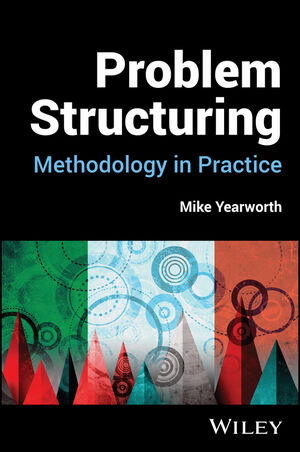
Yearworth, M. (2025). Problem Structuring: Methodology in Practice (1st ed.). John Wiley & Sons, Inc.: Hoboken. https://doi.org/10.1002/9781119744856 

Problem Structuring : Methodology in Practice

Problem Structuring : Methodology in Practice

Current perspectives on approaches to problem structuring in operational research and engineering and prospects for problem structuring methods applicable to a wide range of practice.

Despite the myriad successes of Operational Research (OR) in government and industry, critique of its continued relevance to complex, wicked problems led to the emergence and evolution of Soft OR as a more humanist orientation of the discipline centred on a methodological framing of techniques known as Problem Structuring Methods (PSMs). These have enabled OR practitioners to broaden the scope of OR to address complex problem contexts that require transforming, planning and strategising interventions for their clients. The original core PSMs of Soft Systems Methodology (SSM), Strategic Options Development and Analysis (SODA) and the Strategic Choice Approach (SCA) are presented using a new analytical framework based on constitutive rules, epistemologies, and affordances of the modelling approach. Practical considerations in PSM based interventions are discussed emphasising trust-building, stakeholder identification, facilitation and ethical practice. A wide range of PSM applications are surveyed demonstrating clear intersections with communities of practice grounded in the applied social sciences. The development of a new PSM based on Hierarchical Process Modelling (HPM) of purpose arising from a processual turn in engineering practice offers additional insights for the practice of Soft OR. New developments in PSM practice built on use of Group Support Systems (GSS) and exploiting developments in machine learning are presented. Prospects for bringing the Soft OR project back into better alignment with mainstream OR are discussed in the context of new education programs and a possible processual turn in OR.

Problem Structuring: Methodology in Practice contains four linked sections that cover:

  1. Problem formulation when dealing with wicked problems, justification for a methodological approach, the emergence of soft OR, the relevance of pragmatic philosophy to OR practice.  
  2. Traces debates and issues in OR leading to the emergence of soft OR, comparative analysis of PSMs leading to a generic framework for soft OR practice, addressing practical considerations in delivering PSM interventions.
  3. Charts the emergence of a problem structuring sensibility in engineering practice, introduces a new PSM based on hierarchical process modelling (HPM) supported by teaching and case studies, makes the case for a processual turn in engineering practice supported by HPM with relevance to OR practice.
  4. Evaluation of PSM interventions, survey of applications, use of group support systems, new developments supported by machine learning, re-contextualising soft OR practice.

Problem Structuring: Methodology in Practice is a thought-provoking and highly valuable resource relevant to all “students of problems.” It is suitable for any UK Level 7 (or equivalent) programme in OR, engineering, or applied social science where a reflective, methodological approach to dealing with wicked problems is an essential requirement for practice.

Find a copy:

Note that some institutions may have access via their usual eBook provider (e.g. ProQuest, Perlego), if not by default through their institutional subscription, then by a separate order for this specific title.

Chapter summaries:

A PSM Reading List


A PSM Reading List

  • Ackermann, F., & Eden, C. (2011). Making strategy: mapping out strategic success (2nd ed.). Sage: London.
  • Baert, P. (2005). Philosophy of the social sciences : towards pragmatism. Polity: Cambridge.
  • Callon, M., Lascoumes, P., & Barthe, Y. (2009). Acting in an uncertain world : an essay on technicaldemocracy. MIT: Cambridge, Mass.
  • Checkland, P. (1999). Systems thinking, systems practice: Includes a 30-year retrospective. John Wiley & Sons: Chichester.
  • Checkland, P., & Poulter, J. (2006). Learning for action : a short definitive account of soft systems methodology,and its use for practitioner, teachers and students. John Wiley & Sons: Chichester.
  • Checkland, P., & Scholes, J. (1999). Soft Systems Methodology in Action: Including a 30-year retrospective. John Wiley & Sons: Chichester.
  • Conklin, J. (2006). Dialogue mapping : building shared understanding of wicked problems. John Wiley & Sons: Chichester.
  • Eden, C., Jones, S., & Sims, D. (1983). Messing about in problems : an informal structured approach to their identification and management. Pergamon: Oxford.
  • Friend, J., & Hickling, A. (2005). Planning under pressure : the strategic choice approach (3rd ed.). Elsevier Butterworth-Heinemann: Oxford.
  • Keys, P. (Ed.). (1995). Understanding the process of operational research : collected readings. John Wiley & Sons: Chichester.
  • Kilgour, D. M., & Eden, C. (Eds.). (2020). Handbook of Group Decision and Negotiation. Springer International Publishing: Cham. doi:10.1007/978-3-030-12051-1
  • Morecroft, J. (2007). Strategic modelling and business dynamics : a feedback systems approach. John Wiley & Sons: Chichester.
  • Pidd, M. (Ed.). (2004). Systems modelling : theory and practice. John Wiley & Sons: Chichester.
  • Pidd, M. (2009). Tools for thinking : modelling in management science (3rd ed.). John Wiley & Sons: Chichester.
  • Rosenhead, J. (Ed.). (1989). Rational analysis for a problematic world : problem structuring methods for complexity, uncertainty and conflict. John Wiley & Sons: Chichester.
  • Rosenhead, J., & Mingers, J. (Eds.). (2001). Rational analysis for a problematic world revisited : problem structuring methods for complexity, uncertainty and conflict (2nd ed.). John Wiley & Sons: Chichester.
  • Salhi, S., & Boylan, J. (Eds.). (2022). The Palgrave Handbook of Operations Research. Palgrave Macmillan Cham. doi:10.1007/978-3-030-96935-6.
  • Senge, P. M. (1990). The Fifth Discipline: The Art and Practice of the Learning Organization. Random House: London.
  • Vennix, J. (1996). Group Model Building: Facilitating Team Learning Using System Dynamics. John Wiley & Sons: Chichester.
  • Yearworth, M. (2024). Problem Structuring : Methodology in Practice. John Wiley & Sons: Chichester.

A Systems Reading List

A Systems Reading List

I often get asked to recommend books on systems thinking, systemic problem structuring, and systems modelling – from general introductions to specialist texts. In this update I have reduced the list to a more manageable length and split it into two parts – essential and further reading. Note that I recommend the 1999 versions of ‘Systems thinking, systems practice‘ and ‘Soft Systems Methodology in Action’ since they both include Checkland’s excellent reflections on 30-years’ of Soft Systems Methodology (SSM). If you are learning about and using SSM then I think you also need to know something about Strategic Options Development and Analysis (SODA)/JourneyMaking and the Strategic Choice Approach (SCA).

Essential Reading

  • Ackermann, F., & Eden, C. (2011). Making strategy : mapping out strategic success (2nd ed) London: Sage.
  • Beer, S. (1985). Diagnosing the systemChichester: John Wiley & Sons Ltd.
  • Checkland, P. (1999). Systems thinking, systems practice: Including a 30-year retrospective. Chichester: John Wiley & Sons Ltd.
  • Checkland, P., & Poulter, J. (2006). Learning for action : a short definitive account of soft systems methodology, and its use for practitioner, teachers and students. Chichester: John Wiley & Sons Ltd.
  • Checkland, P., & Scholes, J. (1999). Soft Systems Methodology in Action: Including a 30-year retrospective. Chichester: John Wiley & Sons Ltd.
  • Jackson, M.C. (2019). Critical Systems Thinking and the Management of Complexity. Chichester: Wiley-Blackwell.
  • Midgley, G. (2000). Systemic intervention : philosophy, methodology, and practice. New York: Kluwer Academic/Plenum.
  • Mingers, J., & Rosenhead, J. (eds) (2001). Rational analysis for a problematic world revisited : problem structuring methods for complexity, uncertainty and conflict (2nd ed). Chichester: John Wiley & Sons Ltd.
  • Pidd, M. (2004). Systems modelling : theory and practice. Chichester: Chichester: John Wiley & Sons Ltd.
  • Pidd, M. (2010). Tools for thinking : modelling in management science (3rd ed). Chichester: John Wiley & Sons Ltd.
  • Sterman, J.D. (2000). Business dynamics : systems thinking and modeling for a complex world. Boston, Mass.: Irwin McGraw-Hill.
  • Vennix, J. (1996). Group Model Building: Facilitating Team Learning Using System Dynamics. Chichester: John Wiley & Sons Ltd.

Further Reading

  • Ackoff, R.L., & Emery, F.E. (1972). On purposeful systems. London: Tavistock Publications.
  • Coyle, R.G. (2004). Practical strategy : structured tools and techniques. Harlow: Financial Times Prentice Hall.
  • Friend, J.K., & Hickling, A. (2005). Planning under pressure: the strategic choice approach (3rd ed). Oxford: Elsevier Butterworth-Heinemann.
  • Jackson, M.C. (2003). Systems thinking: creative holism for managers. Chichester: John Wiley & Sons Ltd.
  • Midgley, G., & Ochoa-Arias, A. (2004). Community operational research : OR and systems thinking for community development. New York ; London: Kluwer Academic/Plenum.
  • Morecroft, J.D.W. (2007). Strategic modelling and business dynamics : a feedback systems approach. Hoboken, N.J.: Wiley
  • Ramage, M., & Shipp, K. (2009). Systems Thinkers. London: Springer.
  • Richardson, G.P. (1991). Feedback thought in social science and systems theory. Philadelphia: University of Pennsylvania Press.
  • Senge, P.M. (1990). The Fifth Discipline: The Art and Practice of the Learning Organization. London: Random House.